


Head of the Laboratory: Lyubimova Tatyana Petrovna
Phone: +7 (342) 237-83-31
E-mail:
The Laboratory of Computational Fluid Dynamics started in 2002. Since the establishment of the Laboratory, it has been headed by Prof. Tatyana Petrovna Lyubimova, Doctor of physical and mathematical sciences. The laboratory fundamental research is concentrated on studying the influence of different non-stationary fields, such as vibration, electromagnetic fields, and rotation, on the behavior of non-uniform hydrodynamic systems under terrestrial and microgravity conditions.
Much attention is paid to the development and implementation of new numerical methods, high-performance parallel computing algorithms, and to the creation of software application packages. Numerical modeling results are used in preparation for both ground-based and space experiments and are essential for interpreting the data obtained during these experiments. The laboratory team took part in designing the space experiment IVIDIL (Influence of Vibrations on Diffusion in Liquids) focused on studying the influence of vibration on the separation of binary mixtures and the experiment DCMIX (Diffusion Coefficient Measurements in Ternary Mixtures), where transport processes in a three-component liquid mixture were studied. The experiments were conducted on the International Space Station, the European sounding rockets and the Russian satellite Foton. The research team was also involved in data processing.
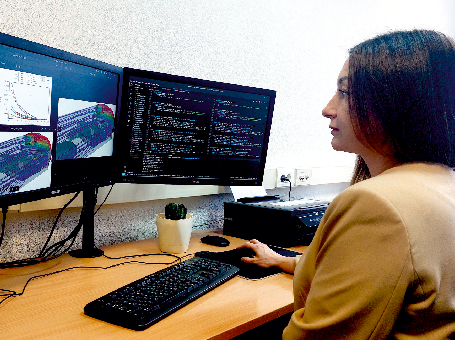
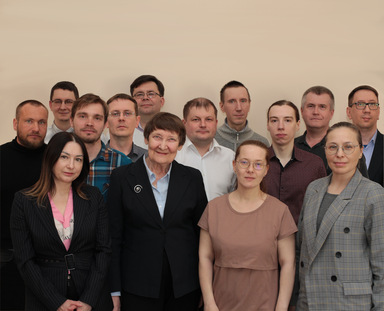
The experience gained by laboratory researchers in the field of hydrodynamics of multiphase media provides a foundation for creating vibrational phase separation technologies. Technological solutions for the flotation separation of multicomponent ores into mineral fractions are currently being developed in cooperation with the Laboratory of Organic Complexing Reagents of the Institute of Technical Chemistry UB RAS. They rely on a comprehensive theoretical and experimental analysis of the influence of ultrasound on the interaction of bubbles with mineral particles in a liquid in the presence of flotation reagents.
Research on modeling the dynamics of water masses and the propagation of pollutants in large surface water bodies, considering density effects, is performed jointly with the Laboratory of Land Hydrology Problems of the Mining Institute UB RAS. Laboratory achievements have solved some environmental issues, such as reduction of water hardness at the Chusovskoy water intake (Perm) and disposal of excess brines of potash plants, that affect the Perm Krai economy, and, as a consequence, the economy of the Russian Federation.

Stability of equilibrium and supercritical convection regimes in single- and multi-component hydrodynamic systems; influence of parameter modulation, vibrations, rotation, and electromagnetic fields on the stability of equilibrium and flows in closed cavities, channels, and layers
Bou-Ali M.M. et al. EPJ E. 2015. V. 38. No. 4. Article No. 31
Lyubimova T.P., Perminov A.V. J. Non-Newtonian Fluid Mech. 2015. V. 224. P. 51–60

Vibrational dynamics of multiphase media
Lyubimov D.V., Lyubimova T.P., Cherepanov А.А. Dynamics of interfaces in vibrational fields. M. Fizmatlit; 2003. 216 с
Lyubimov D.V. et al. Phys. Fluids. 2006. V. 18. No. 1. Article No. 012101

Development of methods for controlling crystal growth and phase separation processes using vibrations, and electric and magnetic fields
Lyubimova T.P. et al. J. Cryst. Growth. 2004. V. 266. Nn. 1–3. P. 404–410.
Lyubimov D.V. et al. J. Fluid Mech. 2016. V. 807. P. 205–220

Development of efficient numerical methods for solving problems in hydrodynamic stability theory and parallel computing algorithms for modeling hydrodynamic processes
Prokopev S. et al. Phys. Rev. E. 2019. V. 99. No 3. Article No. 033113
Vorobev A. et al. J. Comp. Phys. 2020. V. 421. Article No. 109747

Modeling the dynamics of water masses and the spread of pollutants in large water bodies considering density effects
Lyubimova T. P. et al. J. Hydrology. 2014. V. 508. P. 328–342
Lyubimova T.P. et al. J Hydrology. 2016 V. 534. P. 579–589